Community Epigenetics
Meditations on Our Shared DNA
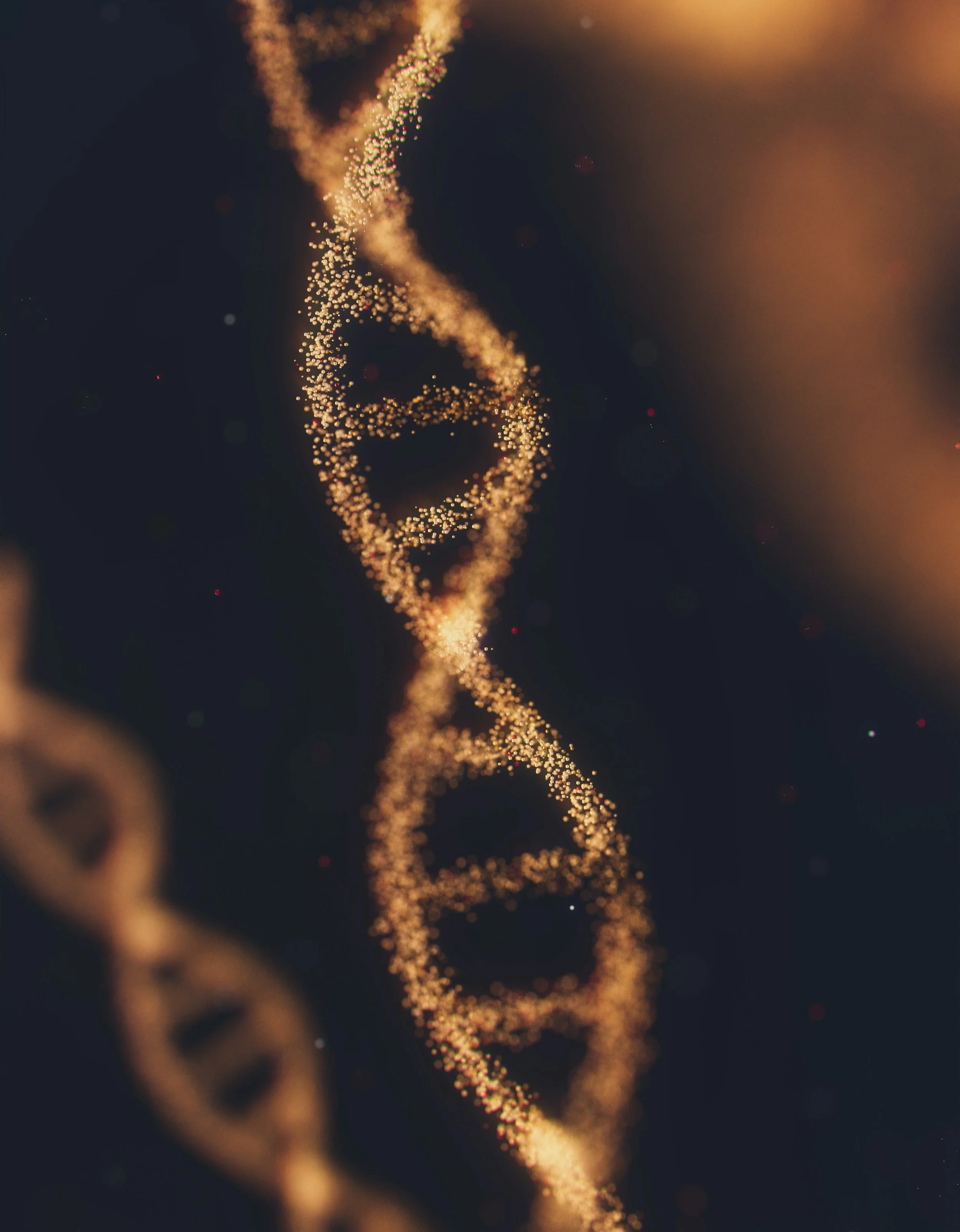
Photo by Anirudh
How Do We Define Community?
Sometimes the desire to be precise about language and words gets in my way. I love a perfect word used in the right way to mean the exact thing I am thinking. Science is very prescriptive in this way, as is its older friend Philosophy. [If you’re a fan of ontology, you (conceptually) dig what I am saying. If ontology is a word that means the study of being and also means a knowledge structure of precisely defined concepts, what is it not? I can think of a million things that it is and is not, so how useful is it? That’s an empirical question, I might say or I simply digress too much into Being and Nothingness]. ANYWAY, the need to literally define is both a blessing and a curse when it comes to community.
Our definitions and perspectives inform how we think about and experience a 'thing' and vice versa. Whether we come to know something by experience, science, wisdom, or other ways of knowing, we hold those things with us as we navigate the world. A thing, like the concept of community, can morph over time, change its shape depending on circumstances and perspectives. Community can be defined in a limited and narrow way or it can be defined in an expansive, encompassing way. Each of us holds our perspective of community with us. Our concept of community informs our thoughts and actions within our community along a narrow pathway or towards more expansive views.
That continuum of how we define community has an impact on the range of possible options to navigate the world. Do we think of community as a smaller object, like a group of people, a neighborhood block or a small town? Do we think about the community existing in and around us, inhabiting our homes, our yards, our water, the air we breathe? Is it more than that? Is our community a cosmos of all things interconnected, from the micro to the macro? How do we invite the conceptually expansive and the pragmatically concrete into our ways of knowing and being in community?
We behave locally and dream in metaphysical space. Where do those two points meet? Our thoughts inform our actions, our actions impact more than we can see. Our community is all around us. Let’s start from there, grab a few tools, and end up with a new model for studying community.

Photo by NASA Hubble Space Telescope
Analogies and Metaphors For Communicating Across Space
There’s nothing better than a good analogy or metaphor sometimes. It’s like a cheat code for linking concepts across subject matter, disciplines, systems. When we want to communicate an idea effectively to many different people with varied backgrounds, we tend to use an analogy to bridge the gap. It helps people understand and translate how something mimics or operates across contexts. “It’s like riding a bike” conveys that once you do something enough, it becomes relatively automatic and you no longer think about doing it. Thinking in analogies is me riding a bike. It just happens. So indulge my kick-start push off and pedalling around so we can use analogies as an art form and a tool for inspiring new ways of understanding community.
I also love a metaphor, I can’t help it. If an analogy is an art form, a metaphor is the canvas. How we paint a picture is our thought, intent, and action coming together in a new, creative way. It’s as unique as a fingerprint. We create and re-create all the time in our hearts and minds. We behave locally and dream in metaphysical space. Community is a space. If we think about community as a living, breathing thing, we can imagine the biology and physiology hidden underneath the skin and bone and muscle of all the structures of our community. Community is a body. We are a part of how that body moves, how it adapts and grows, how it endures.
Now we have a few tools to ride across familiar terrain while forging our own path.
Resilience, Social Fabric, and Community DNA
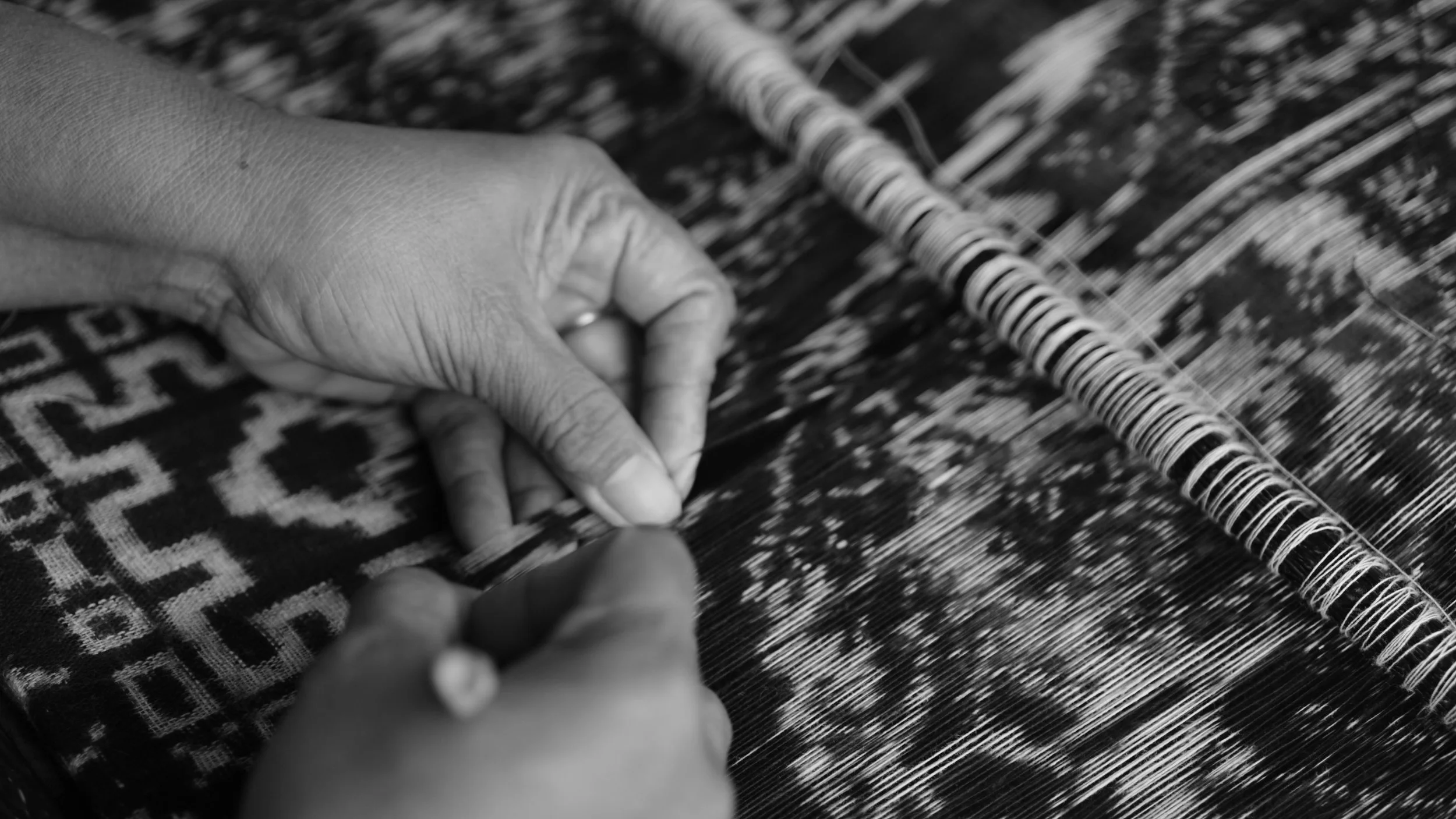
Photo by I Made Mindia Diana
When I think about Resilience, I think expansively of what it ‘is’. The science suggests resiliency is the ability to be effective - to make change in the face of setbacks or opportunities. It's also the ability to adapt to that change and respond to what is happening in the environment. It means sustaining, surviving, continuing. So what is 'it'? A thing, a way of being, a process, an end result? Is it all of those things? I think that resilience is the art and science of creation and re-creation over and over again. It is the ecocycle of life. It is the nature of all things. It is influenced by internal and external factors. Learning, growing, changing.
When I think about Social Fabric, I think of what keeps us together. Invisible and visible bonds. It’s our connections that cohere a part of us to each other. We use trust as an accelerant, a glue that holds this piece to that piece. We have a responsibility to our community because we share a fate, our common bond in sickness and in health. We thrive in a community that cares, acknowledges, and knows how and why we are connected. It’s shorthand for having a sense of humanity towards all that comprises our community. It can be broken, it can be repaired. The power to break and to repair reside in our thoughts, intent, and actions.
When I now think about Community DNA, I think about building blocks and instructions for development, growth, and function. It’s the famous double-helix holding all of our genetic code. Imagine that we define community as a place (not a conceptual space), like the small town you are in now or your neighborhood in a large city or the rural area of family farms and wide meadows. A community’s genes would be the relatively stable fixed structures we inherit in the place we call community. A river runs through it. A highway separates family from family. It could be the physical boundaries and geography, it could be institutions and government, rules, laws, mandates, roles, systems. Community DNA are all the parts of a place-based community and how it operates, how relationships are enacted, written or unwritten, how the network as a whole functions.

Photo by Mark Jeremy
Let’s use the body metaphor: DNA is the structural code a community is born into. It defines what could happen but not what does happen. Nature, nurture, and all the interactions in between. Imagine a perfectly fine tuned, healthy community system. We have inherited verdant spaces, there is a place for everyone and everything. It runs smoothly, reinforcing that which services us all well and equally. Imagine that our present and future community body is perfectly calibrated to be all that we need to thrive. In Gwedolyn Brooks’ words: We are each others’ harvest, we are each others’ business, we are each others’ magnitude and bond.
But what if the biology and structure of our community is dysregulated or dysfunctional? What if it’s run by a Homeowners Association (HOA) that dictates the color of paint we use on our canvas? It’s always a shade of beige isn’t it? Maybe what we thought could happen in our community - all of its potential and its gifts - is not what is happening. Something is wrong in the system. What we built isn’t working according to plan. The instructions no longer match the contents of our hearts. We’ve lost our way.
Could we change our Community DNA? Is there hope among us to re-build, re-wire, re-create the conditions, the structures, the functioning of our healthy community body? Do we have the will and the way to reimagine and shift the genetic expression of our community dreams? How long would it take, what is the time scale of this kind of social evolution? How would we strengthen or evolve those DNA building blocks that benefit and heal us most while dampening or turning off instructions that harm?
Community Epigenetics: Defined
In biology, epigenetics is the study of how behaviors and environmental factors cause changes that affect the way your genes work. Unlike genetic changes, epigenetic modifications do not alter the underlying DNA sequence. Instead, they function like "switches" that turn genes on or off, determining which proteins are produced and when. We need to know the DNA and genes of our community as well as the instructions created for their expression. AND we need to know what kinds of changes or modifications in our community effectively switch on what serves us and switch off that which harms. Therefore I posit this definition:
Community epigenetics is the science of understanding how and why social behaviors and the environment in our community change our collective experiences and outcomes.
Let’s return to an analogy. The processes under study in epigenetics operate like the old-timey switchboards of the past where people would connect telephone lines so one end could talk to the other. There was a huge board of holes and tons of cable wires. When one of the lights by a hole lit up, the switch operator would plug one end of the line in and turn on the power to the other end. Imagine the switchboard in our bodies doing that same work, replicating instructions, creating new cells, making sure everything runs on time. Sometimes the switches are turned on because we felt safe and nurtured as an infant. Sometimes the switches are turned off when pollution in the air clogs the cilia cells in our lungs and they can no longer sweep out the irritants. Nature and nurture both play a role in creating those conditions for switches to be turned on or off.
I think this is a useful model for thinking about community and our ability to change, adapt, and endure.
One hundred and fifty years ago, we discovered the substance that makes up the nuclei of DNA. Eighty two years ago, Watson and Crick showed us the double-helix of how DNA is strung together, how it functions and works. A genome is the complete map of the genetic instructions for the development, growth, and function of an organism. Four years ago, a complete sequence of the human genome was published in all its glorious complexity. And just a mere six years ago, Emmanuelle Charpentier and Jennifer A. Doudna won the Nobel Prize for developing CRISPR - the technique for cutting and editing genes to rewrite the code and instructions.
This is the science of creation and re-creation AND the mechanisms of change. It serves as a path forward in how we can understand and study community as a model. What is the glorious complexity of our community? What is our potential and our responsibility to each other? Community is an organism, an ecosystem, a body. What is its unique DNA? Who creates the instruction manual? Does community function as we imagined, as we wish, as we dream? What and where is our social CRISPR? What do we want to edit and what do we want to remain?
Community epigenetics is our history of resilience written and revised by all things. What can and should our story be?

Photo by Kieran Sheehan